The epic that never ends
Khon, the masked dance-drama of Thailand, emerged in the royal courts of Ayutthaya around 1385. It tells the Ramakien, Thailand's version of the Indian Ramayana. By the time it was fully written down, it contained 311 characters across 138 episodes. Performed at the tempo of traditional Khon, the complete epic would take over 720 hours. It has never been performed in full.
The tradition was exclusively male and exclusively royal for centuries. After the abolition of absolute monarchy in 1932, it passed to the Department of Fine Arts, rebuilt from archival records and the memories of surviving masters.
Over 100 demon masks, 30 monkey varieties
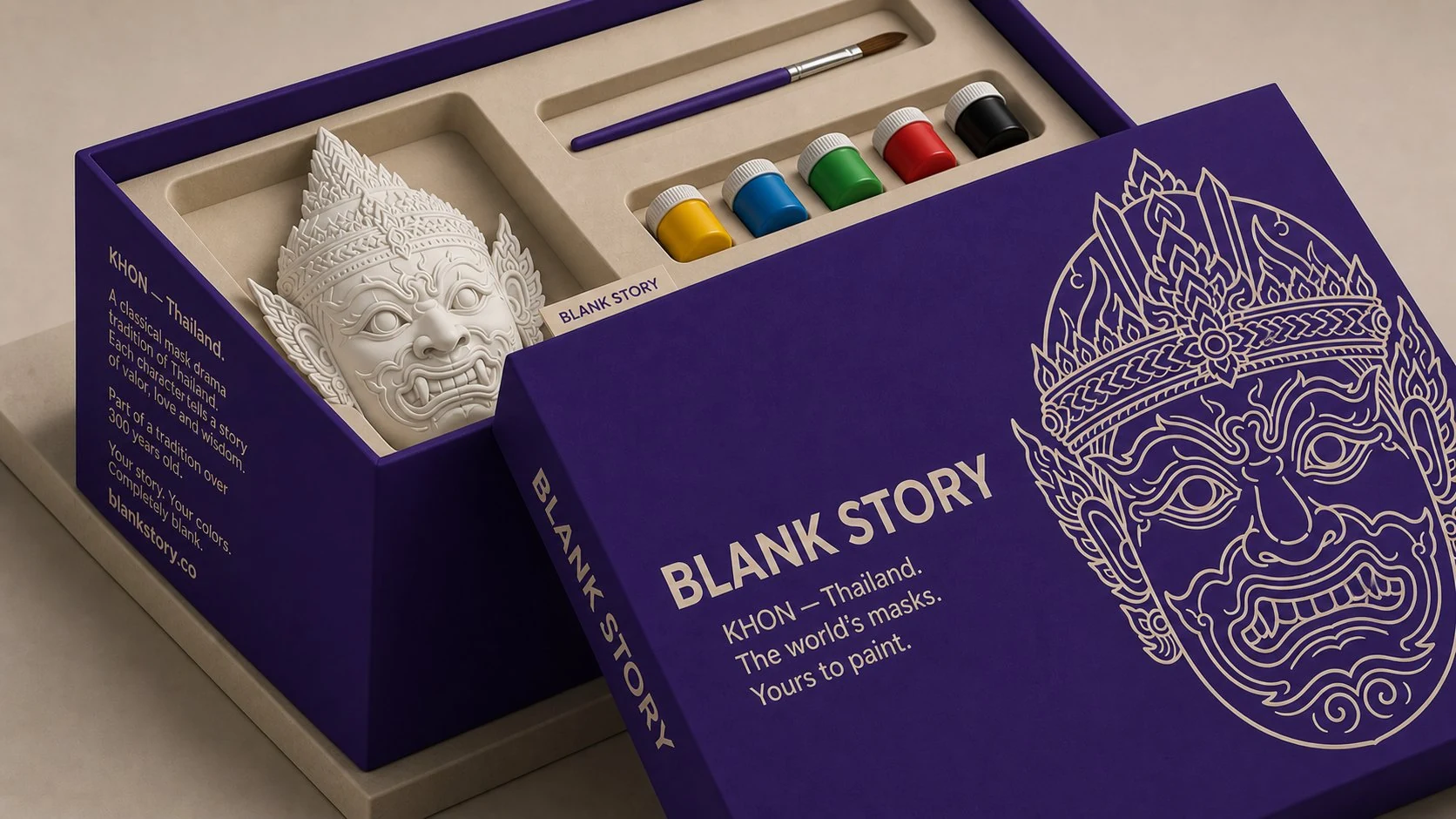
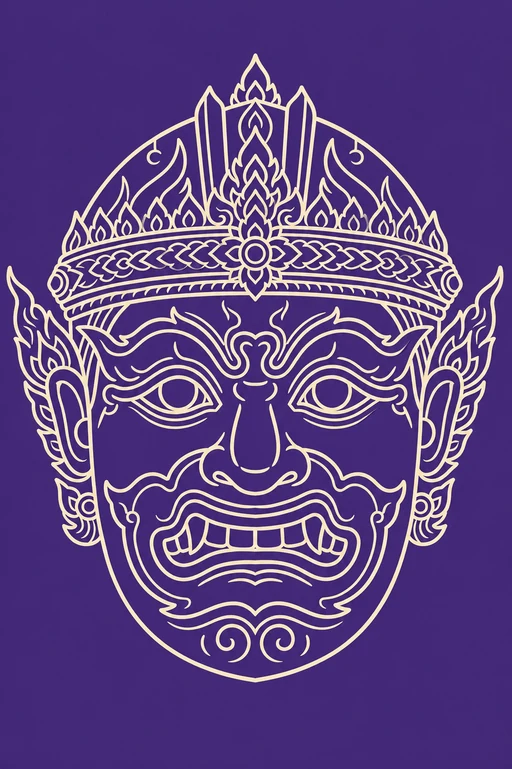
A Khon mask is a full helmet built from papier-mâché over a clay mold, then gilded and inlaid with mirrored glass. Colors are a precise language. Phra Ram (Rama) is green, not blue as in India, a distinctly Thai choice. Hanuman wears white with a gaping mouth holding the "glass canine", a jewel that lets him yawn out suns and moons, being the son of the Wind God.
Before each performance, the Wai Khru ceremony is held, always on a Thursday. Two altars are erected, Buddhist and Brahmanic. The "enlivening of the eyes" ritual brings each new mask to life. The defeat of the demon king Tossakan is taboo to perform publicly. Some powers are not for public display.
Royal patronage, UNESCO recognition
Every king of Thailand's Chakri dynasty takes the regnal name "Rama." Khon visualizes the ruler's identification with Vishnu himself. Performing Khon is an act of political theology.
Queen Sirikit launched the Royal Khon Performance in 2007, triggering a major revival. UNESCO inscribed Khon on November 29, 2018. One day before Cambodia's Lakhon Khol joined the Urgent Safeguarding List. Two traditions, one shared epic, found on the same page of history.