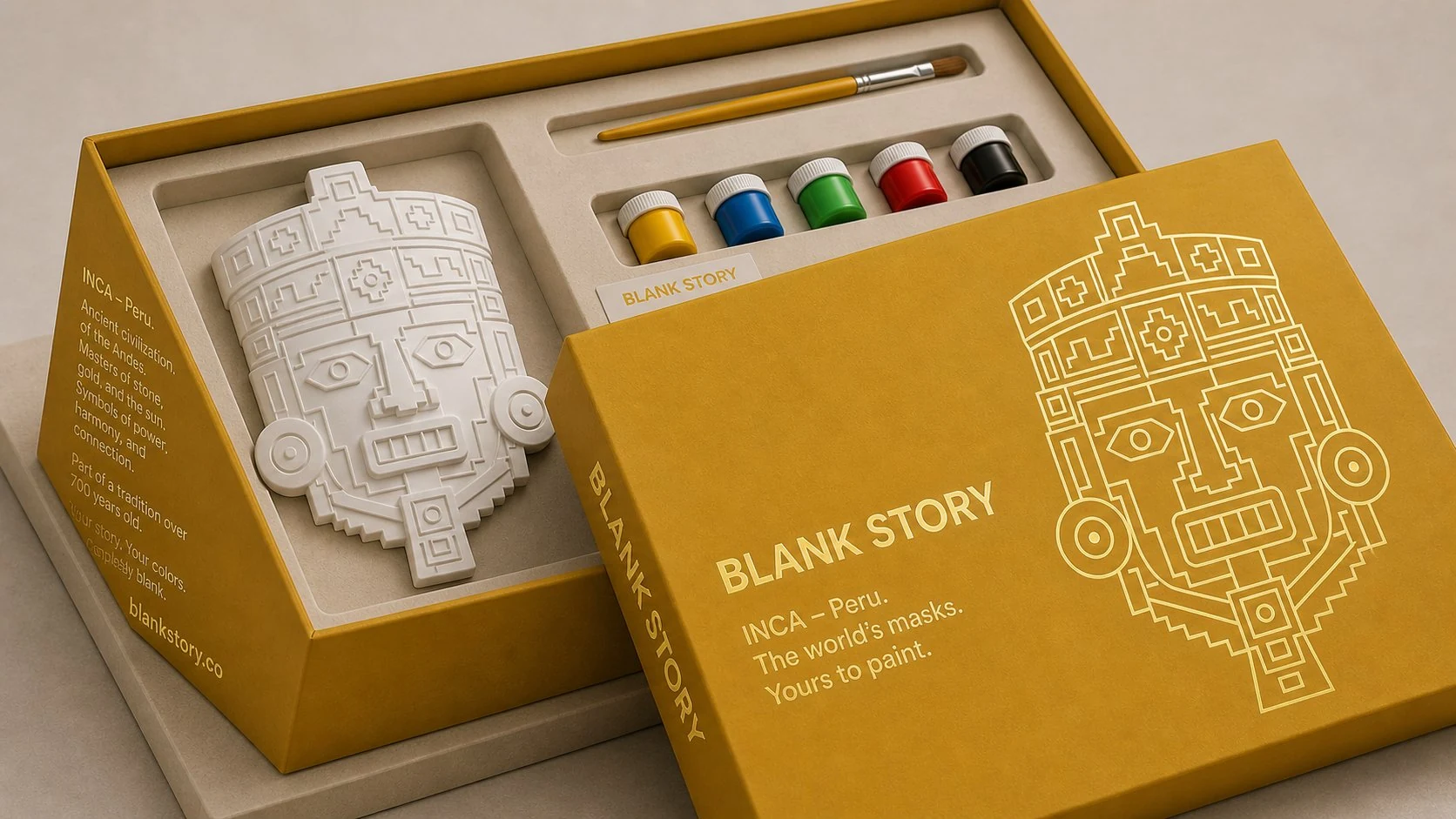
Gold was not a commodity. It was incorruptibility.
The iconic gold funerary masks of the Andes are mostly pre-Inca. The tradition crystallized across three north coast cultures: the Moche (100–800 CE), the Sicán/Lambayeque (750–1375 CE), and the Chimú (1000–1470 CE), before the Inca Empire absorbed and inherited it.
Scholar Paloma Carcedo de Mufarech writes that gold was prized as an incorruptible material, something that would not decay, rather than as a medium of exchange. A gold mask on a dead ruler's face was not a display of wealth. It was a philosophical statement about the nature of time and death. A 2021 Oxford study found that the red pigment on one Sicán mask was bound with human blood and egg whites.
The King Tut of the Americas, five masks in one tomb
The Lord of Sipán, a Moche royal interred around 250 CE, was found in 1987 by archaeologist Walter Alva, the first intact royal pre-Columbian tomb in the Americas. He wore a gold face mask amid sixteen layers of ornaments, buried with retainers, concubines, a dog, and two llamas. Gold necklace beads on the right (sun, masculine), silver on the left (moon, feminine). His mask was not decoration. It was cosmology made wearable.
Sicán excavations revealed as many as five masks per burial. The Inca themselves emphasized ancestor cult over funerary masking: royal mummies (mallquis) were preserved, dressed, and carried out to participate in feasts, political councils, and ceremonies. The dead were not gone. They remained present, with needs, preferences, and a voice in the affairs of the living.
Demons, devils, and the sun, still dancing
The Carnival of Oruro, Bolivia, UNESCO Masterpiece 2001, brings 28,000 dancers and 350,000 spectators together. Its Diablada features fiberglass devil masks staging the Archangel Michael's battle against demons that began as the pre-Columbian god Tiw before Spanish suppression renamed it.
Inti Raymi, the Inca Festival of the Sun, was revived in 1944 from a 17th-century chronicle. Today 500–800 costumed actors perform the rite each winter solstice at Sacsayhuamán. At Qoyllur Rit'i (UNESCO 2011), ukuku dancers wear knitted woolen masks blurring the line between bear and human, and once climbed to the glacier to retrieve sacred ice. The glaciers are now too damaged to allow it.